For most handmade cards, use 80 lb cover cardstock (216 gsm) for the folded base and 65 lb cover (176 gsm) for layers and cut pieces. Choose smooth, matte, solid-core paper unless you have a reason not to. Paint goes on 140 lb (300 gsm) watercolor paper, and envelopes are made from much lighter text-weight paper. The rest of this guide explains why, and how to read the numbers on a pack so you do not bring home the wrong one.
Why Pound Weights Mislead
The "lb" on a pack is a basis weight: what 500 sheets weigh at that paper type's standard uncut size. The catch is that each type has a different standard size, so the same number means different thicknesses.
| Paper type | Basis sheet (inches) | 1 lb equals |
|---|---|---|
| Bond, writing, copy | 17 x 22 | 3.76 gsm |
| Text, book | 25 x 38 | 1.48 gsm |
| Cover | 20 x 26 | 2.70 gsm |
| Bristol | 22.5 x 28.5 | 2.19 gsm |
| Index | 25.5 x 30.5 | 1.81 gsm |
| Watercolor | 22 x 30 | 2.13 gsm |
That is why a pack labeled 110 lb can feel flimsier than one labeled 80 lb. The first is 110 lb index: 110 x 1.81, about 199 gsm. The second is 80 lb cover: 80 x 2.70, about 216 gsm.
Grams per square meter, gsm, has no such problem. It is the weight of one square meter of that paper, whatever the type. When two packs disagree, compare the gsm, which is usually printed in small type next to the pound weight. If it is missing, multiply the pounds by the figure in the table.
Cardstock Weights at a Glance
| Label on the pack | gsm | What it is good for |
|---|---|---|
| 20–24 lb bond (copy paper) | 75–90 | Test prints, quarter-fold cards, envelope liners |
| 28–32 lb bond, or 70–80 lb text | 105–120 | Envelopes, message inserts |
| 67 lb vellum bristol | 147 | Light layers; too soft for a base |
| 65 lb cover | 176 | Layers, cut pieces, pop-up mechanisms, printed cards |
| 110 lb index | 199 | Practice cards and budget bases |
| 80 lb cover | 216 | The standard card base; over the rated limit of some home printers |
| 100 lb cover | 270 | Sturdy bases, 5 x 7 cards, flat cards |
| 110 lb cover | 297 | Very stiff bases; must be scored; many printers refuse it |
| 140 lb watercolor | 300 | Painted panels |
Notice that 67 lb bristol is lighter than 65 lb cover, and 110 lb index is lighter than 80 lb cover. The gsm column puts them in their real order. Packs round these figures a little differently, so the same 80 lb cover appears as 216 or 218 gsm.
Base Versus Layers
The base is the folded part, and it has two jobs: stand up on a shelf and survive being opened. At 80 lb cover an A2 card stands without bowing. A 5 x 7 card has a taller panel and does better at 100 lb, especially if it carries several layers on the front.
Layers have the opposite needs. They should be thin enough that three of them do not turn the card into a brick, and easy to cut with scissors, a knife or a machine. That is 65 lb cover. It also keeps the weight down, which matters when the card is mailed.
A front built from a base plus a mat plus a top panel is already three sheets thick. If the card feels heavy in the hand, drop the layers to 65 lb before you thin the base.
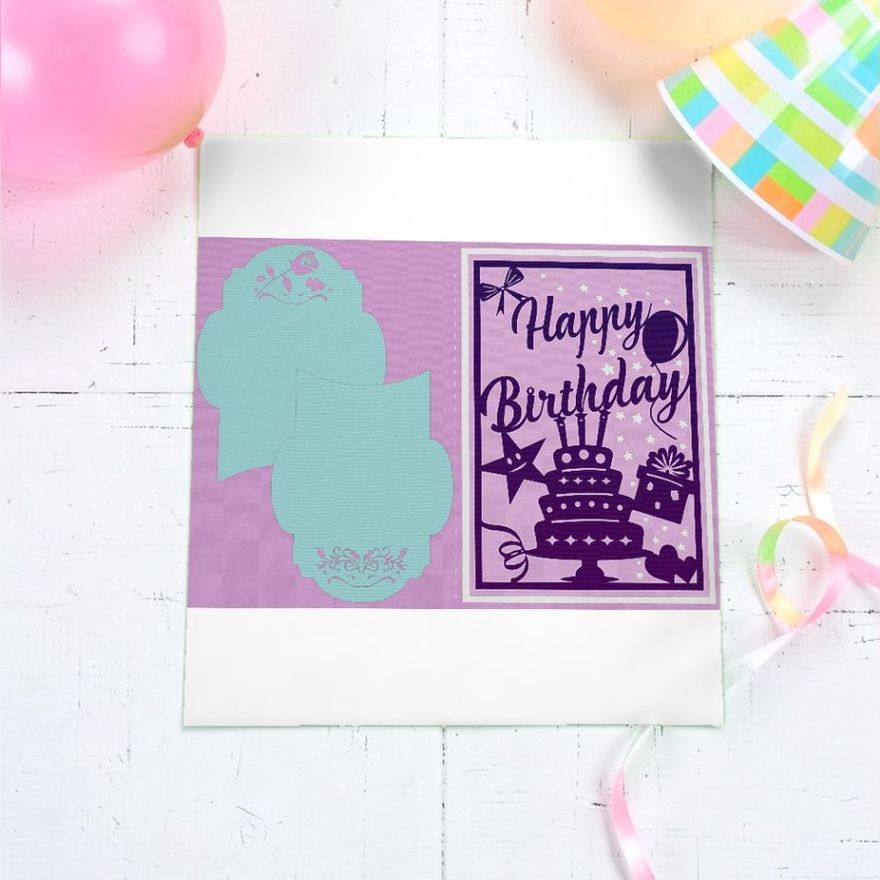
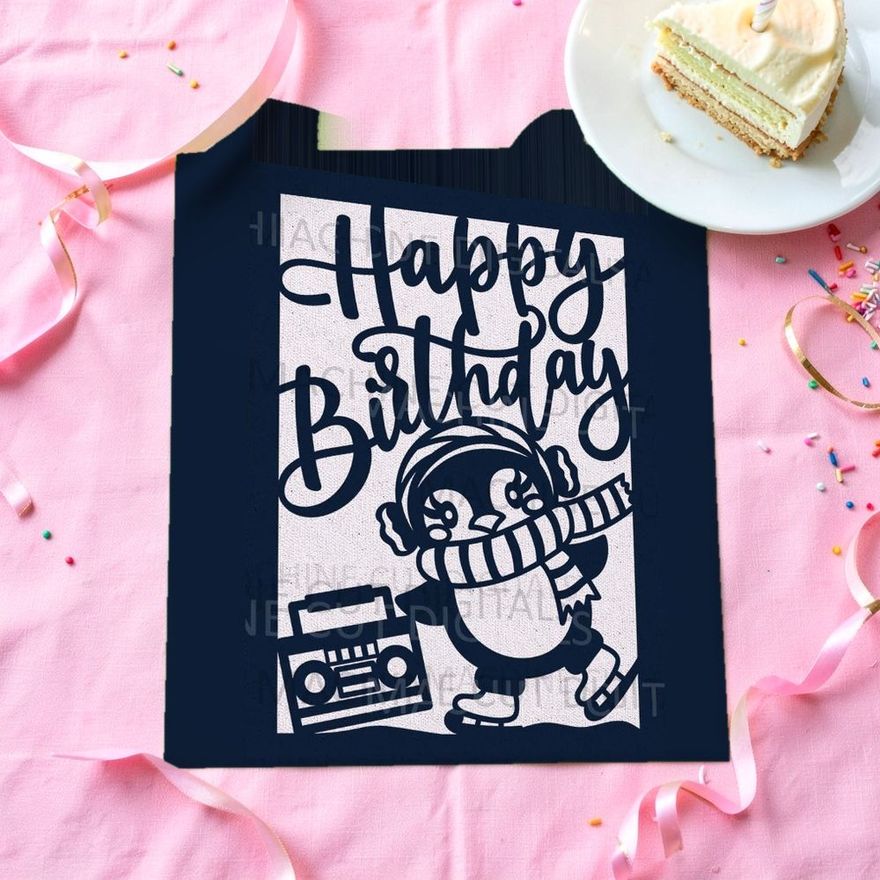
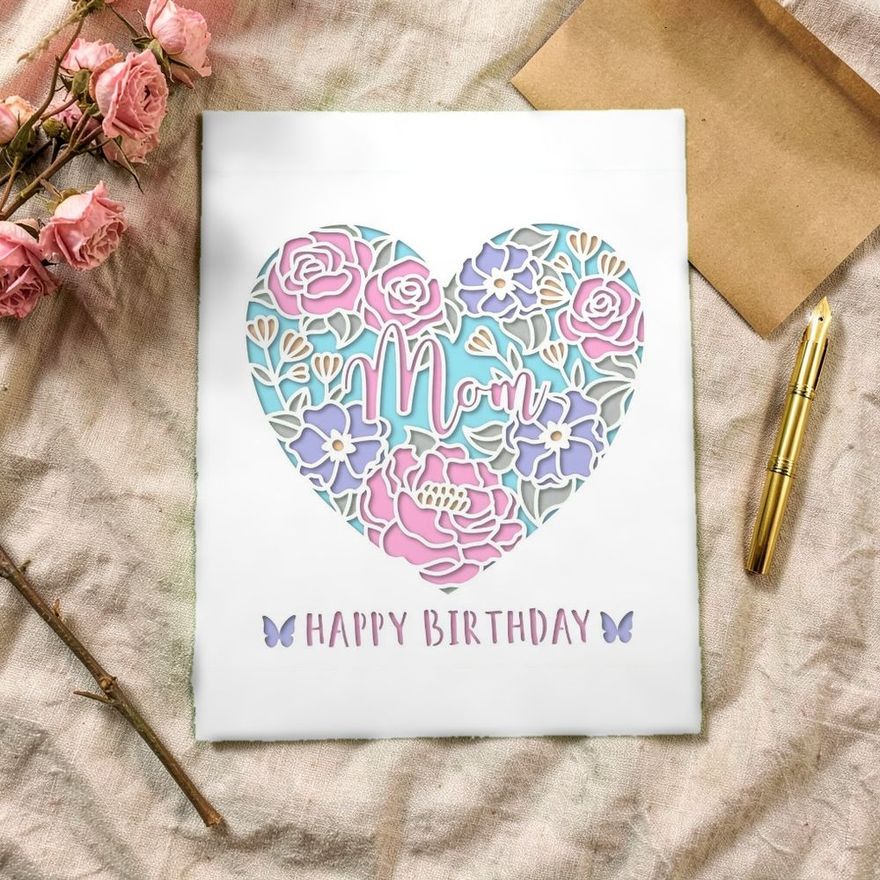
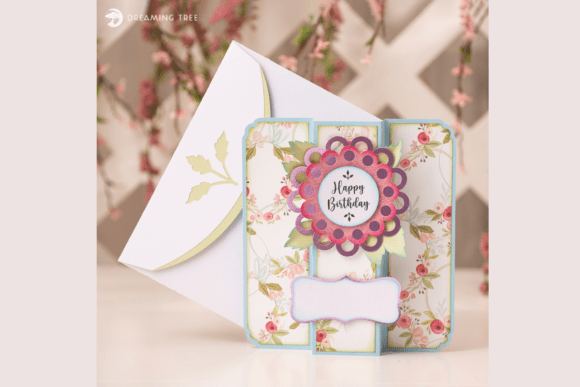
The designs below are named as cut or layered cards, the kind of project where an 80 lb base and 65 lb layers pay off.
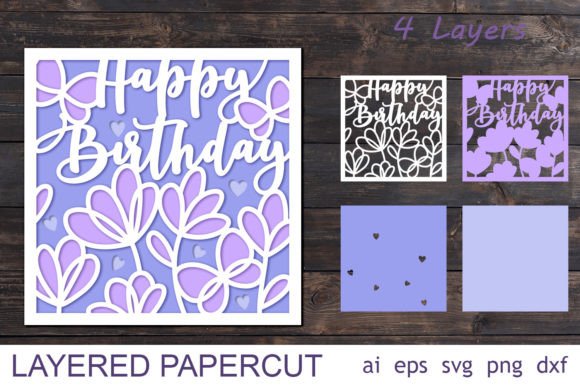
3d Layered Happy Birthday Card Papercut
See the listing ↗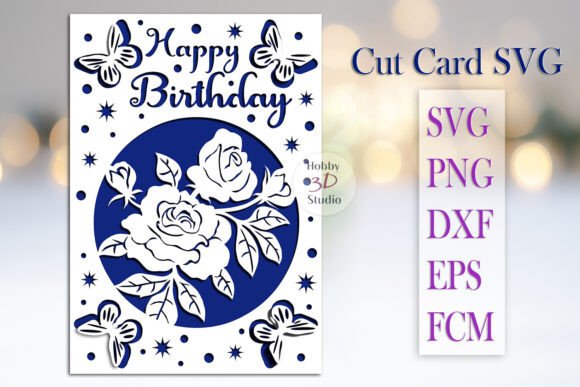
Happy Birthday Card Cut Template SVG
See the listing ↗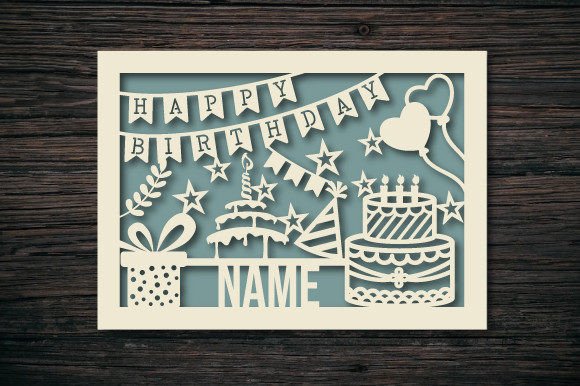
Personalized Birthday Card Paper Cut
See the listing ↗From the collection Birthday Card Ideas. New Creative Fabrica members get 10 free downloads, and any of these can be one of them.
Smooth or Textured
Smooth cardstock is the default. Printers lay ink evenly on it, pens glide, stamps give a full impression, and fine cuts come out with clean edges.
Textured cardstock, sold as linen, canvas or hammered, looks rich on a plain card base and hides fingerprints. The texture works against detail, though. Printed color skips over the low spots, and thin cut lettering tears along the grooves. Use it for bases and solid shapes.
Two more words on the label are worth reading:
- Solid core means the color runs all the way through the sheet. White core paper is colored only on the surface, so a white line shows at every cut edge and fold. For dark card bases and cut designs, buy solid core.
- Coated or glossy cardstock has a sealed surface. It needs the right kind of printer and the right kind of pen, and it cracks at the fold more easily than uncoated paper.
Glitter and mirror cardstock are best kept as accents. They are stiff, they resist glue on the decorated side, and a folded glitter base sheds at the crease.
Paper for Paint and Markers
Water is what ordinary cardstock cannot take. It buckles as it dries, and the surface pills when a brush passes twice. Watercolor paper is sized to hold water on the surface long enough to move the paint.
- Buy 140 lb (300 gsm). The lighter 90 lb (about 190 gsm) sheets buckle under almost any wash, and 300 lb (640 gsm) is more paper than a card panel needs.
- Cold press has a visible tooth and forgives uneven washes. Hot press is smooth and better if you plan to letter over the paint with a pen.
- Paint on a panel, trim it, and mount it on a cardstock base. The panel can warp slightly and still lie flat once it is glued down.
For alcohol markers, use a smooth, heavy cardstock made for them. On ordinary paper the ink spreads past the line and soaks through to the other side. Water-based brush pens and gel pens are fine on any smooth matte cardstock.
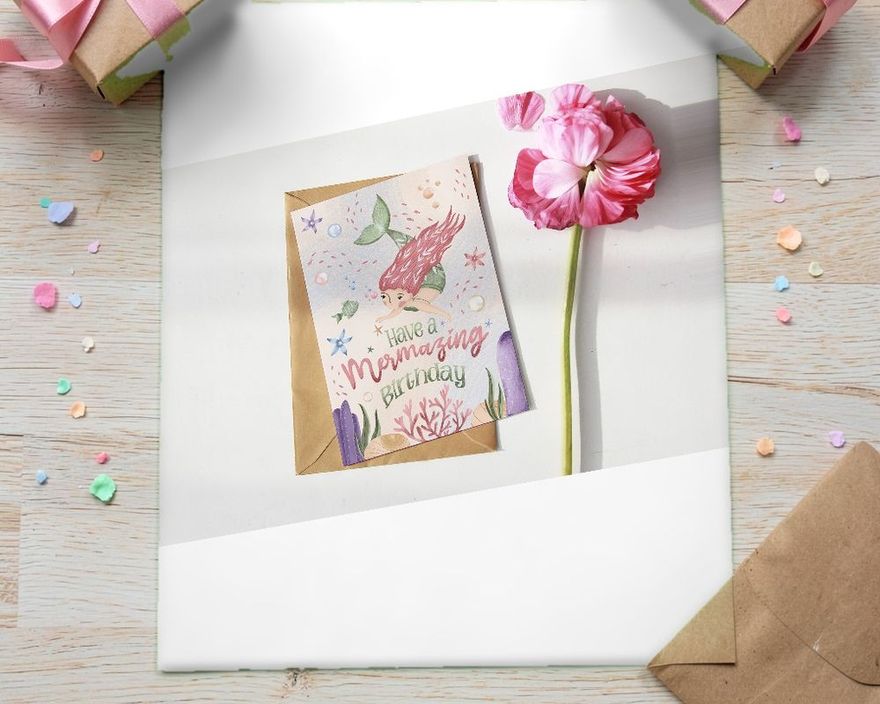
If you like the painted look without the paint, the watercolor and floral birthday cards collection has designs you print or cut instead.
What a Home Printer Can Handle
Every printer has a maximum paper weight, listed in its manual or spec sheet in gsm, and the official numbers are lower than card makers tend to assume. Three examples from the manufacturers' own documents:
- HP's spec sheet for the ENVY 6000e series lists plain paper at 60 to 90 gsm and cards up to 200 gsm. That covers 65 lb cover (176 gsm) and 110 lb index (199 gsm), but not 80 lb cover (216 gsm).
- Canon's PIXMA manuals give 17 to 28 lb bond (64 to 105 gsm) for plain paper and allow heavier sheets only among Canon's own papers.
- Epson's guide for the EcoTank ET-2800 gives 17 to 24 lb bond (64 to 90 gsm) for plain paper, with heavier stock limited to Epson's named papers.
In practice many inkjets do pull 80 lb cover through, especially from a rear slot that sends the sheet in a straighter path than a tray that bends it around a roller. That is past the rated limit on entry-level models, though, so look up your own printer's number and test one sheet before buying a ream.
If your printer balks at a heavy sheet, print the design on lighter paper, trim it and mount it on a heavy base. The result looks more finished than a single printed sheet anyway.
Three things improve a printed card more than a heavier sheet does:
- Use matte, uncoated, bright white cardstock. Colors come out cleaner than on cream or natural white.
- Tell the printer what is in the tray by choosing a heavy or matte paper type in the print settings.
- Feed one sheet at a time.
These three are printables by name, the sort of file that suits smooth matte cardstock at whatever weight your printer is rated for.
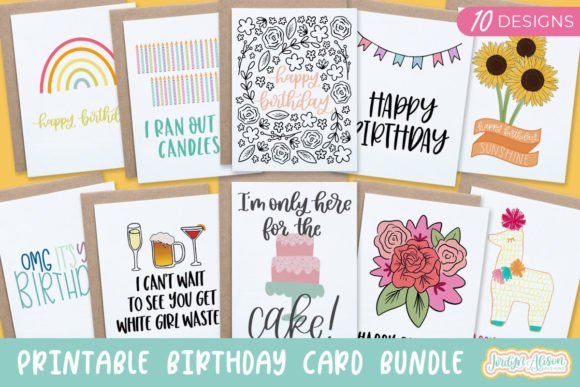
Printable Birthday Card Bundle Vol 2
See the listing ↗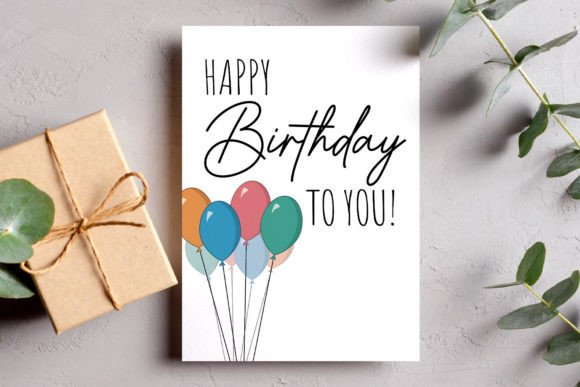
Birthday Card Printable Balloon Graphic
See the listing ↗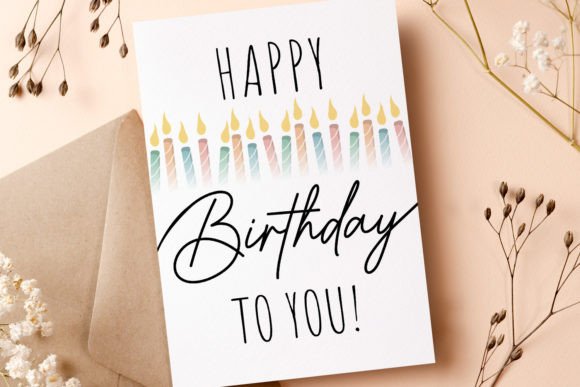
Birthday Card Template Printable Cute
See the listing ↗From the collection Printable Birthday Cards. New Creative Fabrica members get 10 free downloads, and any of these can be one of them.
Settings, duplex printing and smudging are covered step by step in how to print greeting cards at home.
Score Before You Fold
Any paper from 65 lb cover up needs a score line, a pressed groove that tells the fibers where to bend. Folding without one gives a wavy, cracked spine.
- Mark the center of the sheet at the top and bottom edges.
- Lay a ruler across the marks and run a bone folder, an embossing stylus or an empty ballpoint pen along it with firm pressure. A scoring board does the same job faster.
- Fold along the groove and press the fold flat with the side of the bone folder. Put a scrap of paper on top first, so the tool does not leave a shiny streak.
The usual rule among card makers is to fold away from the groove, so the raised ridge of the score ends up inside the card and the outside of the spine stays smooth. On 65 or 80 lb paper either direction works. On heavy or coated stock, following the rule cuts down on cracking.
Paper has a grain, the direction most of its fibers run, and it folds cleanest along it. Bend a sheet gently one way, then the other. The direction that gives less resistance is parallel to the grain, and that is where the fold should go.
If a dark, heavy sheet still cracks, score it twice, a hair apart, to make a wider groove.
Paper and Tools to Begin With
The weights above translate into three packs: a card base stock, a heavier option for printers that accept it, and watercolor cards for paint. A bone folder handles the scoring.
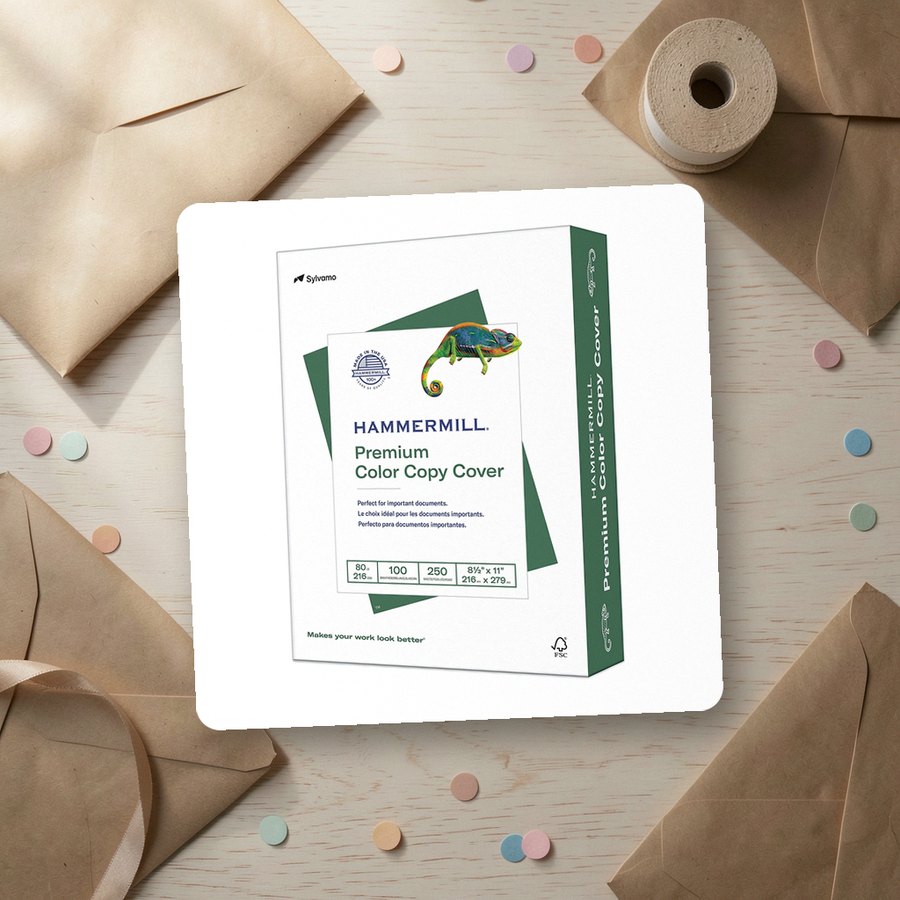 White cardstock, 80 lb coverHammermillSee it on Amazon
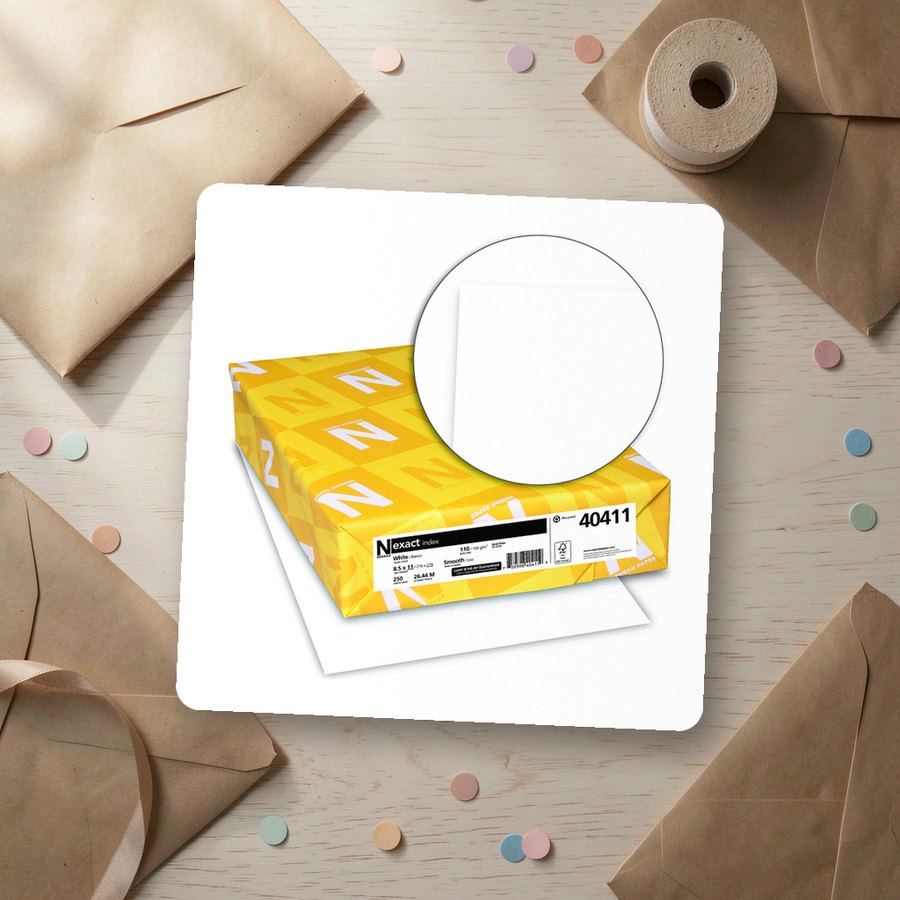 White cardstock, 110 lb indexNeenahSee it on Amazon
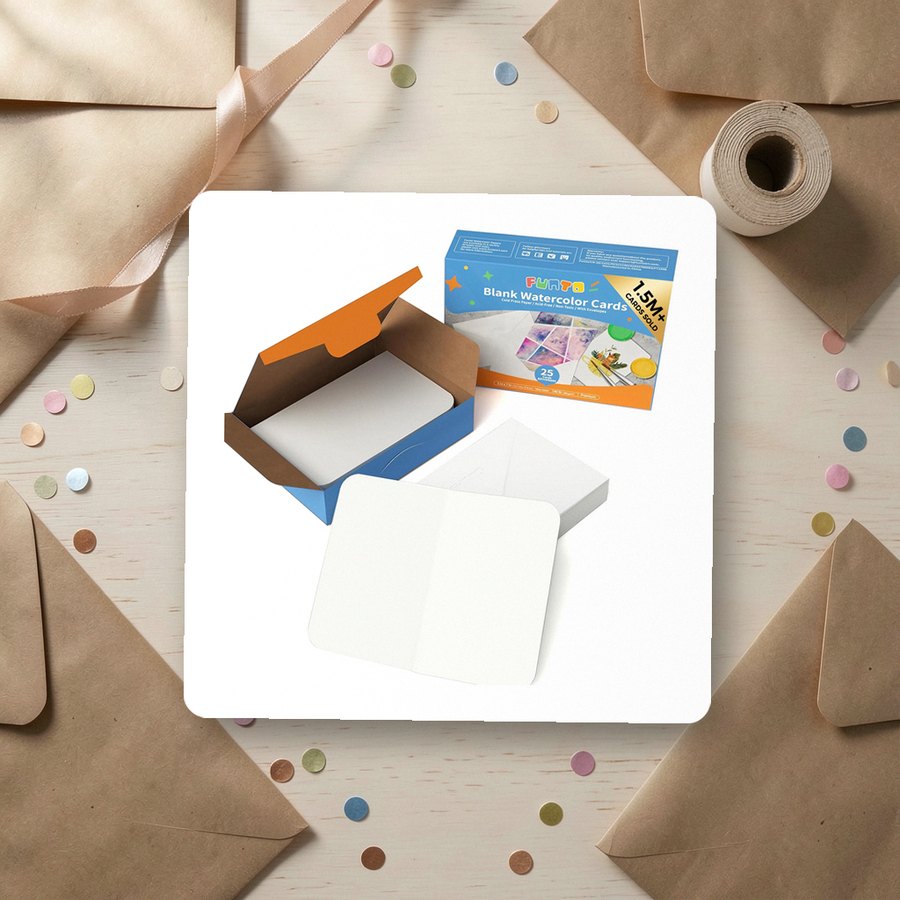 Blank 5 x 7 watercolor cards with envelopesFuntoSee it on Amazon
 Bone folder for scoring and creasingVENCINKSee it on Amazon
 Brush pens, soft and hard tipTombowSee it on Amazon
As an Amazon Associate we earn from qualifying purchases.
A Starter Stack
Three packs cover nearly every card on this site:
- White 80 lb cover, smooth, 8.5 x 11 inches, for bases, plus a lighter white cardstock for printing if your printer stops at 200 gsm
- A mixed-color pack of 65 lb solid-core cardstock for layers
- A small pad of 140 lb watercolor paper, if you paint
Add text-weight paper when you start making envelopes. Before you cut the bases, check card sizes and envelopes, because the size you choose decides how many cards each sheet gives you. If you cut with a machine, making birthday cards with a Cricut matches these weights to cutting settings.
Card Collections for This Guide
Printable Birthday Cards8 hand-picked · open the collection →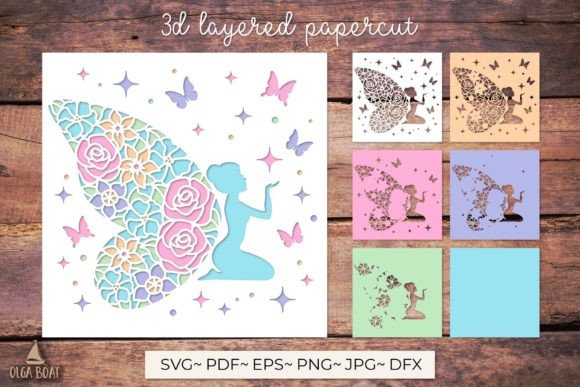 Birthday Card Ideas8 hand-picked · open the collection →
 Watercolor & Floral Birthday Cards8 hand-picked · open the collection →