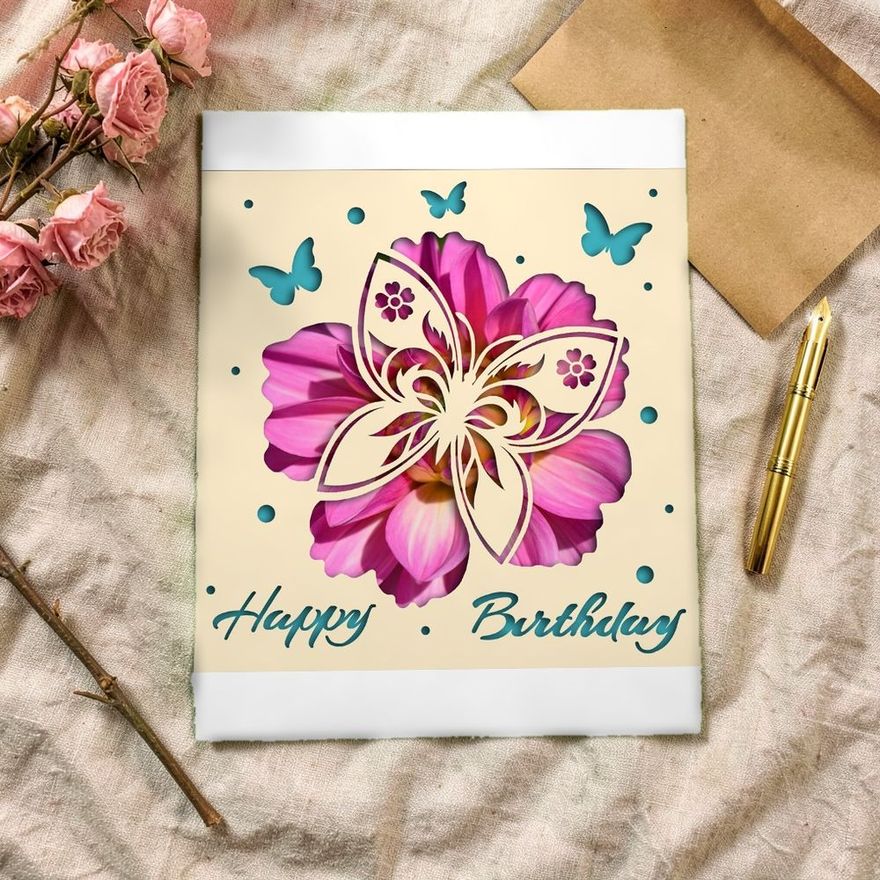
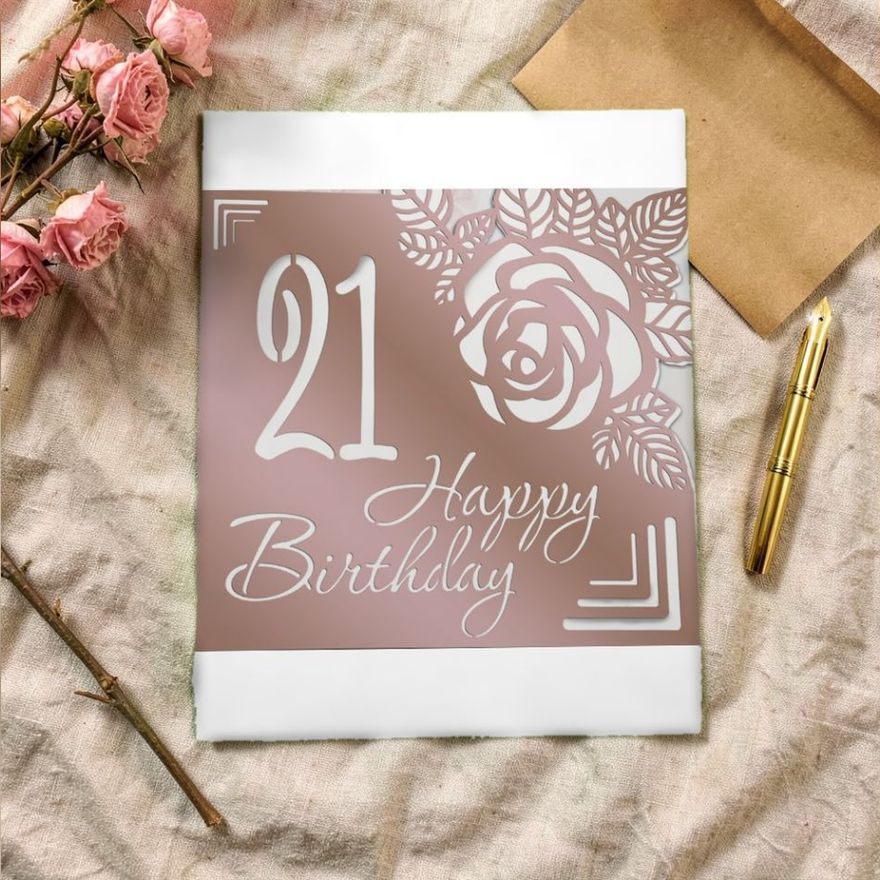
The standard handmade card in the US is A2: 4.25 x 5.5 inches folded (10.8 x 14 cm), made from half a sheet of Letter paper, and mailed in a 4 3/8 x 5 3/4 inch envelope. A7 is the size most people call 5 x 7. A6 sits between the two. Each name really belongs to an envelope, and the card is cut a little smaller so it slides in.
Common US Card Sizes
| Name | Folded card (inches) | Envelope, inches (cm) | Flat, before folding | Cards per Letter sheet |
|---|---|---|---|---|
| A1, also called 4 Bar | 3.5 x 4.875 | 3 5/8 x 5 1/8 (9.2 x 13.0) | 7 x 4.875 | 2 |
| A2 | 4.25 x 5.5 | 4 3/8 x 5 3/4 (11.1 x 14.6) | 8.5 x 5.5 | 2 |
| A6 | 4.5 x 6.25 | 4 3/4 x 6 1/2 (12.1 x 16.5) | 9 x 6.25 | 1 |
| A7, the 5 x 7 card | 5 x 7 | 5 1/4 x 7 1/4 (13.3 x 18.4) | 10 x 7 | 1 |
| A8 | 5.25 x 7.75 | 5 1/2 x 8 1/8 (14.0 x 20.6) | 10.5 x 7.75 | 1 |
| A9, half-fold | 5.5 x 8.5 | 5 3/4 x 8 3/4 (14.6 x 22.2) | 11 x 8.5 | 1 |
| A10 | 5.75 x 9.25 | 6 x 9 1/2 (15.2 x 24.1) | 11.5 x 9.25 | None; use a 12 x 12 sheet |
| Slimline | 3.5 x 8.5 | 4 1/8 x 9 1/2 (10.5 x 24.1), a No. 10 | 7 x 8.5 | 1 |
| Square | 5 x 5 | 5 1/2 x 5 1/2 (14 x 14) | 10 x 5 | 1 |
The envelope sizes are fixed trade sizes. The card sizes are not: card makers and paper sellers list the same named card an eighth of an inch larger or smaller. What matters is the envelope, and the card should be at least an eighth of an inch smaller in both directions. For square envelopes, sellers ask for a full quarter inch.
What the Names Mean
The stationery trade calls these announcement envelopes, or A-style: a square flap, sized for cards and invitations instead of folded letters. The number is only a label. A7 is not seven of anything. A1 is also sold under a second name, 4 Bar.
These are not the same as the international paper sizes with the same letters. Outside the US, A6 means a sheet 105 x 148 mm, about 4.1 x 5.8 inches, and A5 is 148 x 210 mm, about 5.8 x 8.3 inches. If a printable card is labeled A6 or A5 and the designer works in millimeters, it is the international size, and a US A6 envelope will not be the right fit. Read the dimensions, not the name.
What One Sheet Gives You
Letter paper is 8.5 x 11 inches, and A2 exists because of it. Cut the sheet in half across its length and you have two pieces of 8.5 x 5.5 inches. Fold each in half and you have two A2 cards with no waste.
- A2: two card bases per sheet, or four flat panels of 4.25 x 5.5.
- A1: two bases per sheet, with a strip left over.
- A6, A7, A8, A9, slimline and square: one base per sheet. The offcuts become layers and inserts.
- A10: the flat base is 11.5 inches long, half an inch more than a Letter sheet, so it needs 12 x 12 cardstock.
A 12 x 12 inch sheet of scrapbook cardstock gives two A2 bases, or one 5 x 7 base and a 5-inch strip, or two 5 x 5 square bases.
Front layers are cut a quarter inch smaller than the card front, which leaves an even eighth-inch border all around: 4 x 5.25 for A2 and 4.75 x 6.75 for a 5 x 7 card. Which weight of paper to cut each part from is covered in the best paper for handmade cards.
Which Size to Choose
- A2 for most birthdays. It uses paper efficiently, envelopes are sold everywhere, and the small front is easy to fill.
- A7 (5 x 7) when the card needs room: a group card with many signatures, a long message, or a 4 x 6 photo mounted on the front with a half-inch border.
- A6 for a flat 4 x 6 photo or postcard, which fits its envelope as it is.
- A1 for gift enclosures and thank-you notes. Its envelope is only an eighth of an inch over the smallest size the post office accepts.
- Slimline for tall designs such as a row of balloons or a stack of gifts. It fits a regular business envelope.
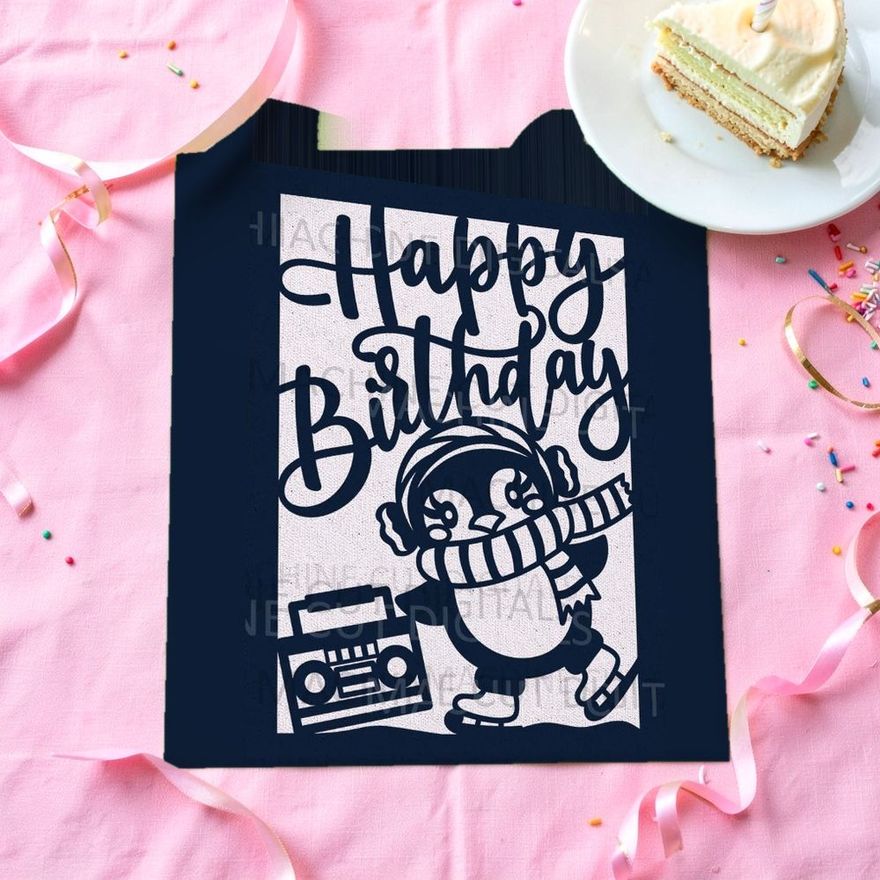
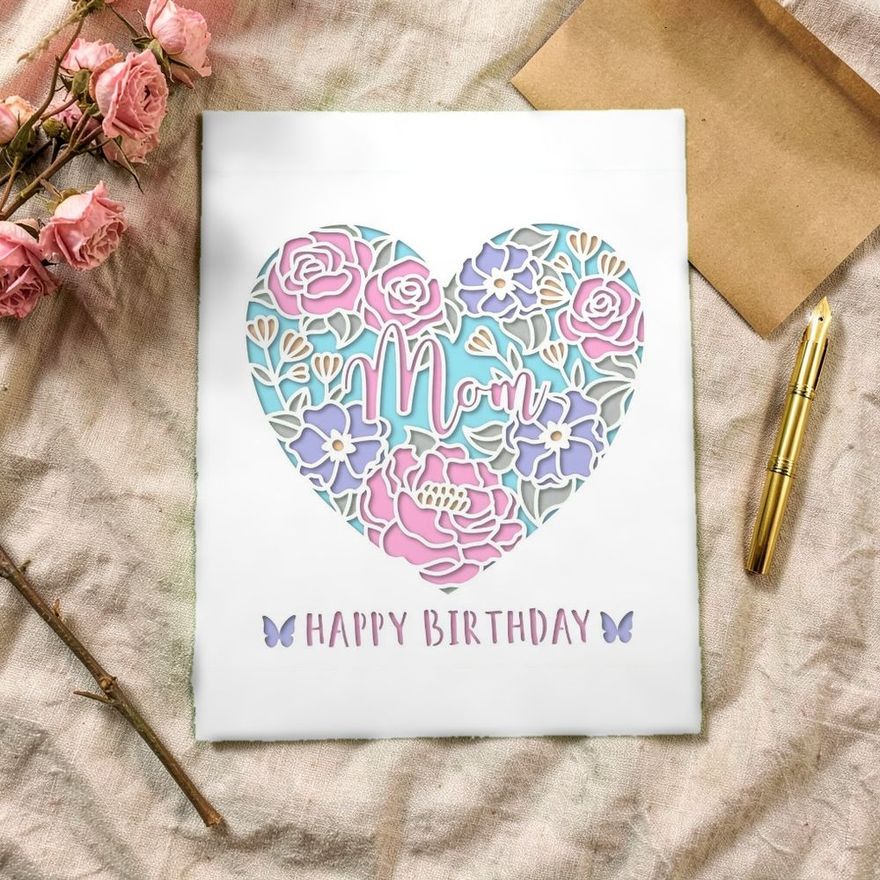
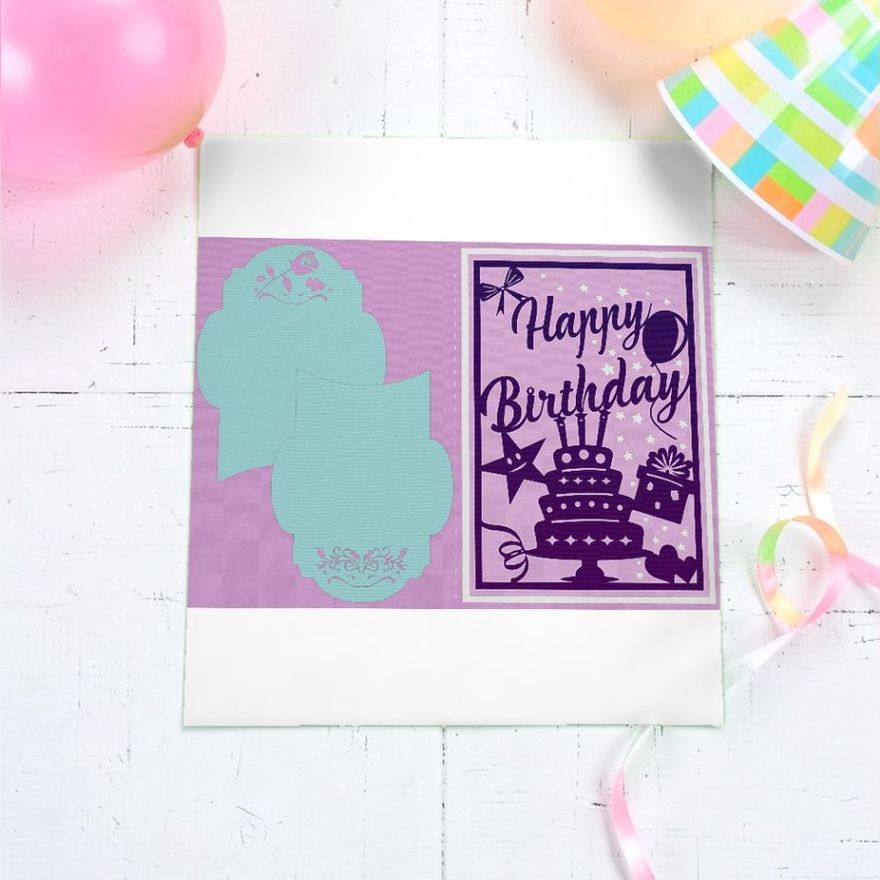
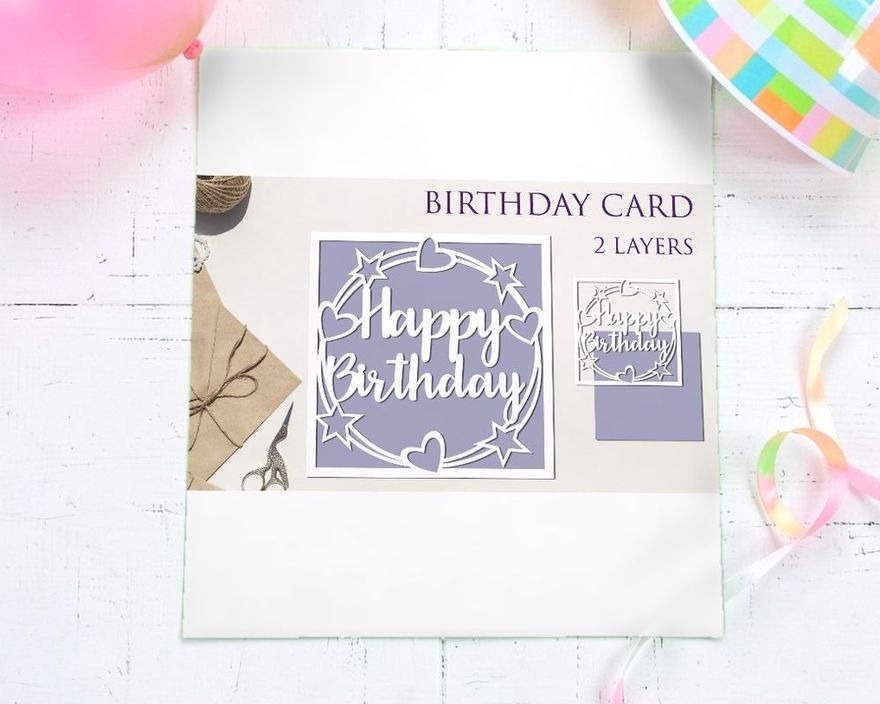
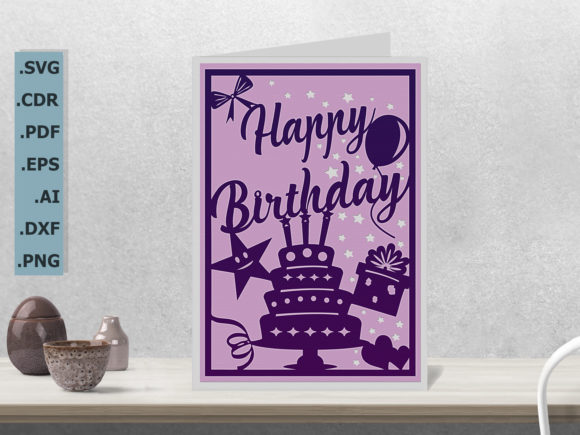
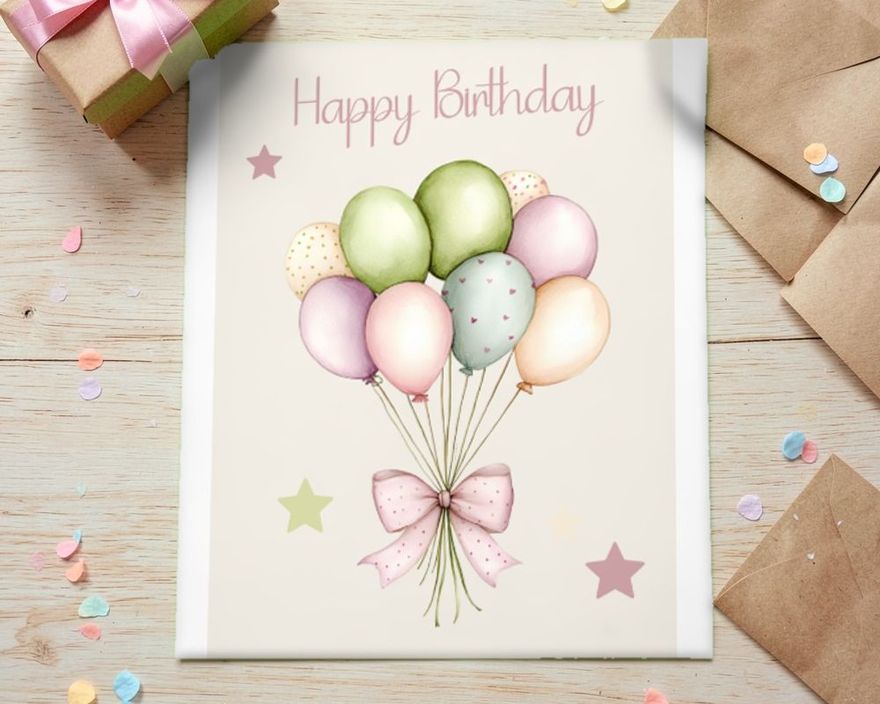
Printable cards are designed for one finished size, so read it in the listing before you buy envelopes. A cut file is more flexible, because an SVG can be scaled to the envelope you already have. The first design below includes envelopes by its name, which settles the question. For the other two, check the finished size and resize if you need to.
Happy Birthday Card SVG & 3 Envelopes
See the listing ↗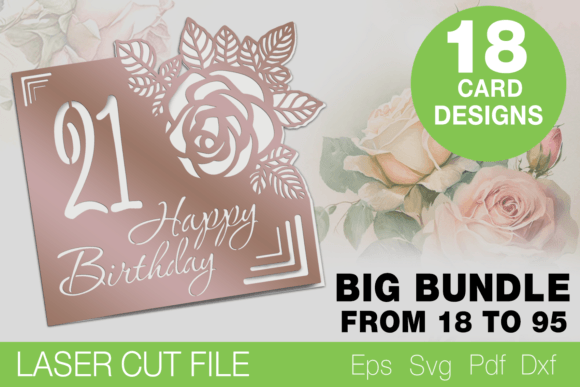
Happy Birthday Card SVG Bundle
See the listing ↗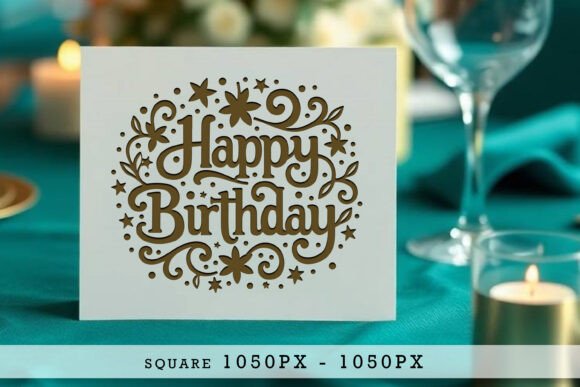
Cricut Happy Birthday Card SVG
See the listing ↗From the collection DIY Birthday Cards. New Creative Fabrica members get 10 free downloads, and any of these can be one of them.
If you are printing instead of cutting, how to print greeting cards at home explains how to keep a design at its true size on the page.
How an Envelope Should Fit
An eighth of an inch of clearance on each dimension is the minimum, and a quarter inch is comfortable. A flat printed card needs the least. A card with foam squares, a shaker window or a bow needs more room in thickness as well as width, so go up one envelope size, or make the card slightly smaller than the standard.
Two more things affect the fit:
- Flap shape. A square flap closes over a thick card more easily than a deep pointed one.
- Paper. A stiff envelope protects a layered card better in the mail, and a thin one shows every bump.
Mailing: Square, Thick and Lumpy Cards
Postal sorting machines are built for flat, flexible rectangles, and the USPS standards for a letter are specific:
| USPS letter standard | Limit |
|---|---|
| Smallest | 3 1/2 inches high, 5 inches long, 0.007 inch thick (8.9 x 12.7 cm) |
| Largest | 6 1/8 inches high, 11 1/2 inches long, 1/4 inch thick (15.6 x 29.2 cm, 6.4 mm) |
| Heaviest | 3.5 ounces (about 99 g) |
| Shape | Rectangular, with the length 1.3 to 2.5 times the height |
Every envelope in the size chart except the square one fits. A2 is the closest call: 5 3/4 divided by 4 3/8 is 1.31, just over the 1.3 line. One First-Class stamp covers the first ounce, and each extra ounce up to 3.5 needs more postage.
USPS calls a letter nonmachinable, and adds a surcharge whatever it weighs, when it has any of these:
- A square shape. A square has a ratio of 1, below the 1.3 minimum. The same rule catches a tall envelope addressed across its short side, so write the address parallel to the long edge.
- A rigid card. An envelope that does not bend easily cannot go around the rollers.
- Uneven thickness. Buttons, thick bows, wooden shapes and shaker windows make a lumpy envelope, and the decoration can be crushed.
- Clasps, string or buttons as a closure, or an outside surface that is not paper.
Two more limits matter for handmade cards. Over a quarter inch thick, the piece is no longer a letter and is charged as a large envelope, and a large envelope that is rigid or lumpy is charged as a package. A 5 x 7 card with a heavy base and several layers can also pass one ounce, so weigh it on a kitchen scale.
Anything smaller than 3 1/2 x 5 inches, such as a 3 x 3 inch mini card, is not mailable by itself and has to travel inside a larger envelope. Rules change, so for anything unusual, hand the envelope over at the post office counter and ask.
Address a dark or patterned envelope on a plain white label. It keeps the address readable for the sorting machines and for the person delivering it.
Make Your Own Envelope From a Square
Any card can have an envelope if you have a sheet of paper large enough. Use text-weight paper, about 70–80 lb text or 28–32 lb bond. Thin scrapbook paper and gift wrap also work. Cardstock makes a bulky envelope that cracks at the folds.
The size of the square comes from the card. Add the card's width and height, plus about an inch and a half. That total is the diagonal of the square, measured corner to corner. For an A2 card that is 4.25 + 5.5 + 1.5 = 11.25 inches, the diagonal of an 8-inch square. A 5 x 7 card comes to 13.5 inches, a square of about 9.5 inches. Envelope punch boards list the same two paper sizes on their charts.
- Turn the square so it sits like a diamond. Lay the card in the center with its long side running left to right.
- Fold the left and right points in over the card and crease. Leave a sliver of space at each side so the card is not gripped.
- Fold the bottom point up and crease, then the top point down.
- Unfold everything and take the card out. At each of the four spots where two creases cross, snip out the small triangle of paper between the crossing and the edge, so the flaps fold without bunching.
- Fold the sides in again. Run a thin line of glue along the two lower edges of the bottom flap and press it onto the side flaps.
- Slide the card in, fold the top flap down and close it with a glue stick or a sticker.
Make the first one from copy paper to check the fit before cutting the good sheet. If you own a cutting machine, an envelope can be cut and scored in one pass, as described in making birthday cards with a Cricut.
Envelopes, a Trimmer and a Scale
Buy envelopes before you settle on a card size, then cut the card to fit. A postal scale answers the weight question for thick or layered cards.
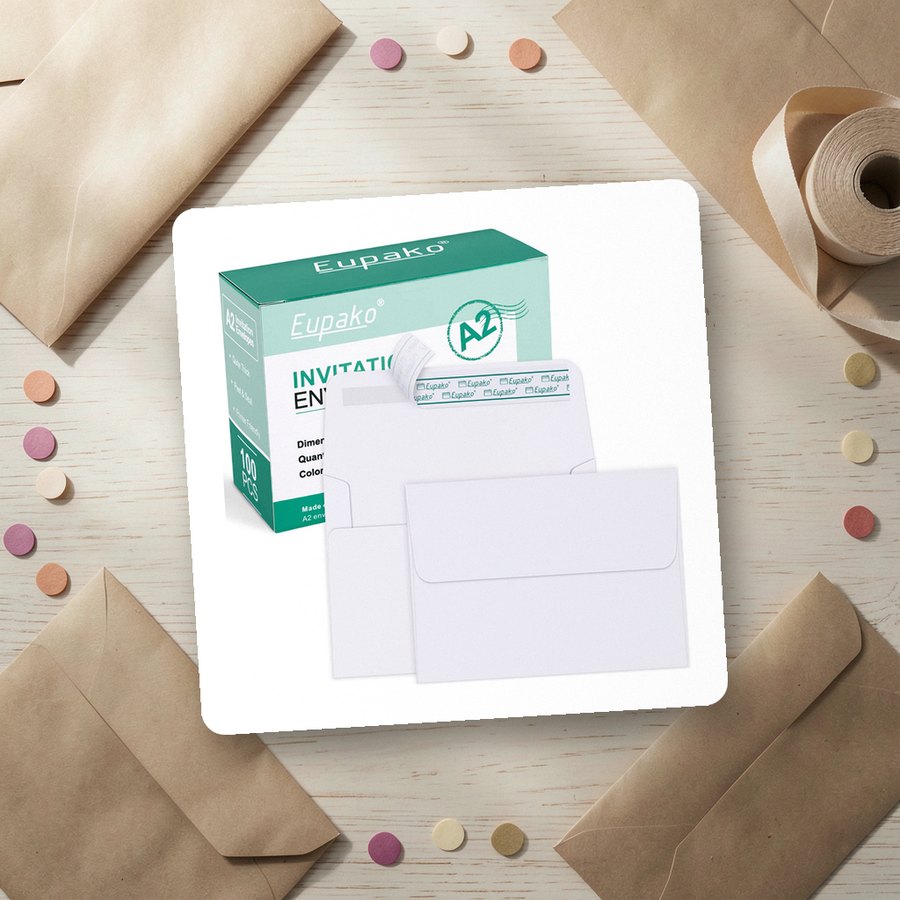 White A2 envelopesEupakoSee it on Amazon
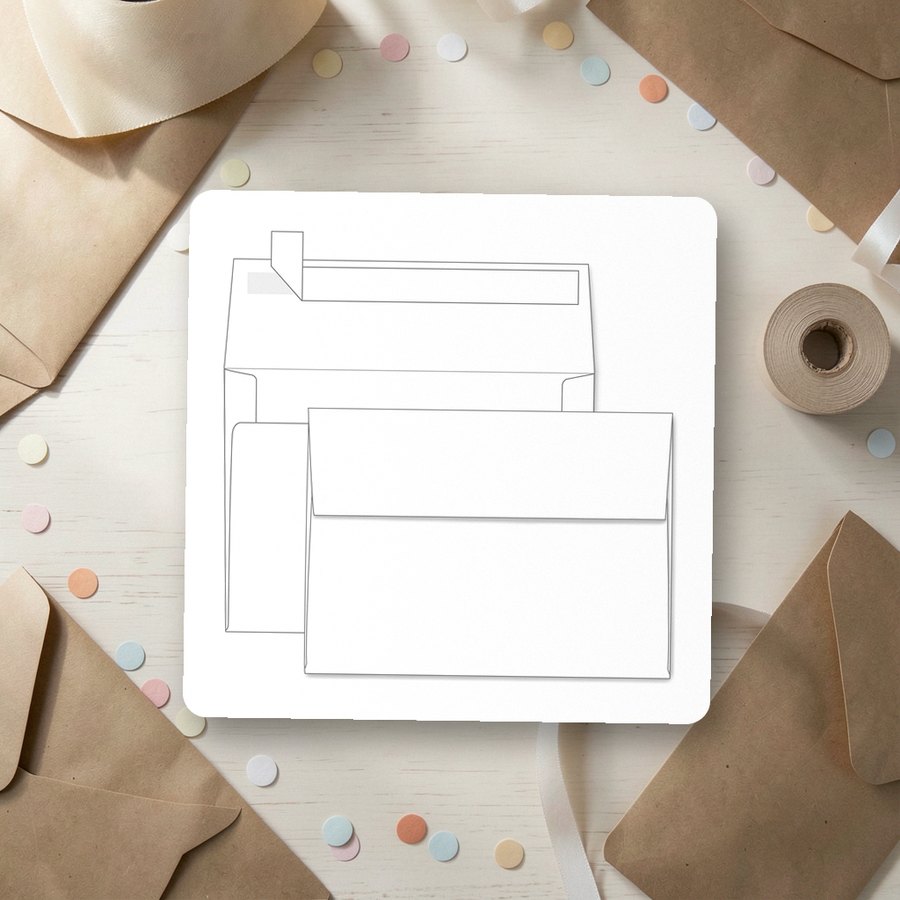 White A7 envelopesGoefunSee it on Amazon
 White square envelopes, 5.5 inchJAM PaperSee it on Amazon
- Digital postal scaleACCUTECKSee it on Amazon
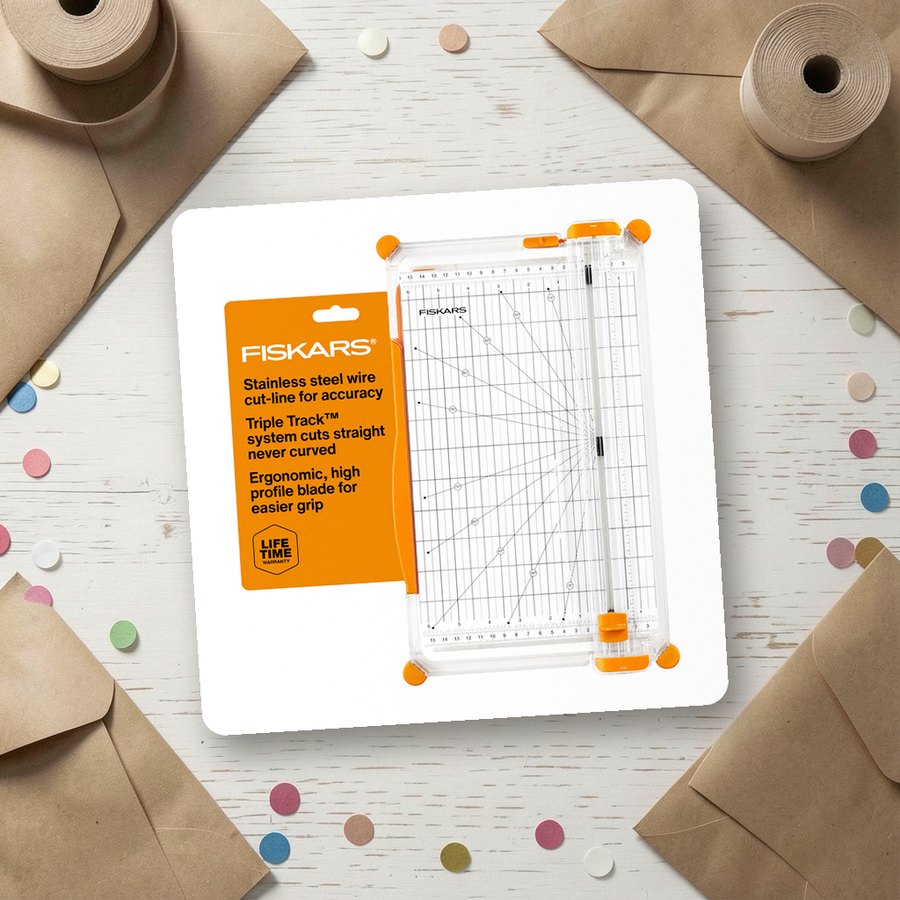 12-inch paper trimmerFiskarsSee it on Amazon
As an Amazon Associate we earn from qualifying purchases.
Before You Buy Paper
Decide the envelope first, then the card. Buying a box of A2 envelopes and cutting every base to 8.5 x 5.5 inches removes the sizing question from every card you make this year. When a design calls for something larger, come back to the table. For designs that print straight onto Letter paper, start with the printable birthday cards collection.
Card Collections for This Guide
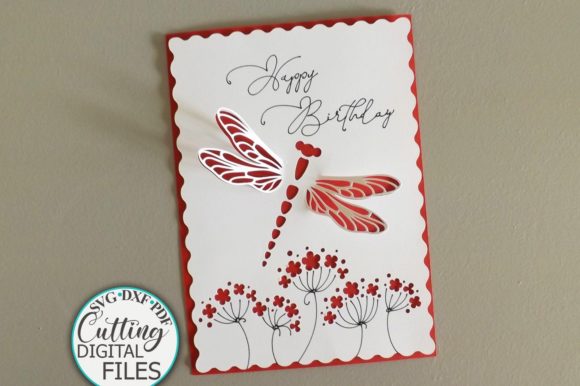 DIY Birthday Cards8 hand-picked · open the collection →
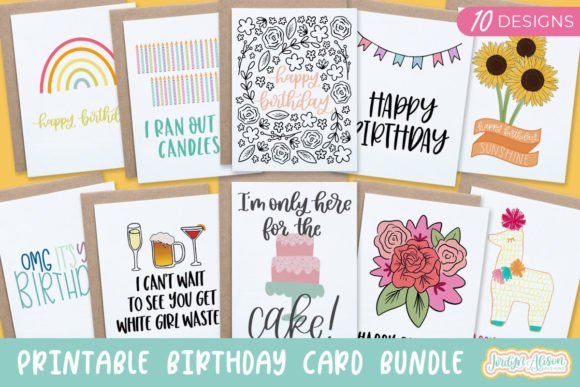 Printable Birthday Cards8 hand-picked · open the collection →